
How San Ramon Residents Are Found
A useful San Ramon residents directory search begins with the fact already in hand. An address points toward ParcelQuest Lite, CCMAP, permits, and the deed index. A person’s name points toward recorded documents, a court party search, an official license, or an entity filing. A family-history question may lead to the San Ramon Library, the Contra Costa County Historical Society, newspapers, census records, and probate. Each result describes a different relationship, so a property owner should not be called an occupant without another source.
Online tools are best treated as pointers. The county assessor suppresses every owner name from its web presentation, California My Voter Status verifies a voter’s own record, and older court files may sit off-site. A sound sequence captures the APN or case number, follows the official index, and then obtains the underlying image, roll entry, or certified copy from the custodian.
- Write down the full name, address, date range, and the exact question being tested.
- Use the county map or property search to normalize the situs and capture the APN.
- Use the APN, legal description, case number, or party name in the matching county or state index.
- Compare a second independent anchor, such as a date, relative, party role, license number, or parcel.
- Ask the custodian for the existing record when the web result is only an index or is not online.
That workflow keeps the residents directory useful for genealogy, reconnecting, estate research, and civic questions without turning an incomplete source into a claim about a living household.
San Ramon Resident Records Offices
San Ramon is an incorporated city in Contra Costa County, but Martinez is the county seat and the main counter destination for recorder, assessor, and older court work. The City Clerk is the first stop for city legislative records, permits and municipal correspondence. The county Clerk-Recorder, Assessor, Elections office, and Superior Court handle the larger record systems that a residents directory search often touches.
Contra Costa Clerk-Recorder
555 Escobar Street
Martinez, CA
Deeds, liens, maps, marriage and vital certificates, fictitious business names, and recorded-document indexes.
Contra Costa Assessor
ParcelQuest Lite and CCMAP provide the online property path.
APN, situs, characteristics, map context, and values appear online; owner names require a lawful offline route.
San Ramon City Clerk
7000 Bollinger Canyon Road
San Ramon, CA 94583
925-973-2539
cityclerk@sanramon.ca.gov
Contra Costa Superior Court
Records Unit
725 Court Street
Martinez, CA 94553
925-608-1000
Public civil, probate, family, criminal, and small-claims access varies by case type.
The county and state sources should not be blended. A clerk-recorded deed proves a filing and its parties. An assessor entry describes the parcel. A court docket supplies party roles and events. The City Clerk’s files identify speakers, applicants, commissioners, projects, and public correspondence. Those differences matter when a search result is used to identify the right person.
Start With the San Ramon Record Question
Ownership, registration, litigation, kinship, and professional affiliation are separate claims. The county assessment roll can connect a person to titled property, but the web version removes the owner name and title does not prove current occupancy. The recorded-document index shows grantor and grantee roles, document types, dates, and legal descriptions. A court result can show a party, case category, hearing, or disposition, but a docket is not the full file.
- Title question
- Start with the Assessor roll and recorder for a parcel, vesting deed, party, and legal description; the owner field is offline and title is not occupancy.
- Court question
- Use the Contra Costa Court Public Portal for case number, party role, dates, events, and public filings; confidential matters and older physical files need separate handling.
- City project question
- Use Planning or Building and Safety for a permit, applicant, project, parcel, and inspection context; plans and active enforcement records may be restricted.
- Past household question
- Use library, census, newspaper, and probate sources for names, kinship, address clues, and life events; directory runs and exact years need catalog confirmation.
A focused question saves time. “Who owns this parcel?” needs a different path from “Who appeared in a 1950 household?” or “Which person signed a San Ramon agenda item?” The source’s purpose sets the meaning of the answer.
Why San Ramon Searches Reach Martinez
San Ramon incorporated in 1983. Contra Costa County, one of California’s original 27 counties in 1850, already held the land, court, probate, marriage, and deed series before the city existed. That history explains why a modern San Ramon address can lead to a county file, a county-era place name, or a counter in Martinez rather than a city department.
Distance also creates a practical split between discovery and proof. CCMAP and online indexes can reduce a trip by supplying a parcel, map, party, or document pointer. The assessment roll, older civil file, certified certificate, or physical directory may still require the responsible office. Record the event date first. Then choose the custodian that had jurisdiction at that time.
Annexation layers add another check. The city’s official map legend lists Canyon Lakes phases from 1986 to 1994, Central San Ramon in 1987, Thomas Ranch in 1998, Dougherty Valley annexations 1 through 18 from 1998 to 2020, Henry Ranch in 1999, and Faria Preserve in 2008. A project created before annexation may remain in county files even though the current mailing address says San Ramon.
Note: Martinez is the county-seat destination for many core counters, while the City Clerk remains the correct custodian for city-created records.
Current San Ramon Directory Sources
There is no single current residents directory that covers every household. The sources below are better understood as partial rolls. Some are open indexes, some require identity or a permitted purpose, and some are office or business directories rather than household lists.
| Source | Who or what appears | Keeper | Access |
|---|---|---|---|
| ParcelQuest Lite / CCMAP | Parcels, APNs, situs, maps and characteristics | Contra Costa Assessor and GIS | Free online; owner roll offline |
| Recorded-document index | Grantors, grantees, liens, deeds, maps and dates | Contra Costa Clerk-Recorder | Online index, counter and orders |
| My Voter Status | One voter’s registration and election context | California Secretary of State | Authenticated self-lookup |
| City records and staff pages | Applicants, speakers, officials, projects and staff contacts | City of San Ramon | Online search or defined CPRA request |
| Business and license indexes | Entities, agents, licenses and public professional status | California Secretary of State and DCA | Free public search, record-specific |
The San Ramon resident lookup path is useful when a search shifts from a place to one person. A street question belongs to the address workflow, and a family-history question belongs to the historical collections rather than a current roll.
San Ramon ParcelQuest Separates Parcel and Person
Contra Costa’s Assessor Maps & Property Information page sends a searcher to ParcelQuest Lite. The documented keys are an Assessor’s Parcel Number or a street address. Vacant land may require the APN because no street address exists. The returned property context can include parcel placement, building square footage, lot size, assessed values, house details, and a map link.
Owner names are deliberately absent from the county web presentation. The public assessment roll remains available through lawful offline channels, and recorded deeds provide a separate title trail. The owner’s mailing address and the parcel’s situs are separate fields. Neither one, alone, proves that a person lives at the property.
- Assessor’s Parcel Number
- County parcel key; useful when the street label is new, changed, or missing.
- Street address
- Situs search key for the taxed parcel, not a household roster.
- CCMAP context
- Boundaries, adjacent lots, aerials, contours, and radius selection.
- Owner field
- Suppressed online; use the public counter or permitted request route.
That privacy design is a useful San Ramon-specific quirk. A map can show where a parcel sits without naming every owner on the web. It also prevents a searcher from mistaking a map result for a complete San Ramon residents directory.
San Ramon City Records Add Address Events
City records fill the gaps between a parcel and a person. Council agendas and minutes can identify applicants, public speakers, commissioners, claims, contracts, appointments, and written comments. Building and Safety records can connect an address to a permit applicant, contractor, permit type, date, inspection, or status. Planning files may contain a project applicant, owner representative, parcel, environmental document, or hearing packet.
The City Clerk request form asks for a date, name, address, phone number, email, a specific description, and a reCAPTCHA. Requests can be submitted online or to the City Clerk at 7000 Bollinger Canyon Road, San Ramon, California 94583, by email at cityclerk@sanramon.ca.gov, or by fax at 925-275-0650. The city lists weekday inspection from 8:30 a.m. to 5 p.m., a 10-day determination, a possible 14-day extension, and $0.10 black-and-white letter copies.
San Ramon City Clerk information is the right starting point for legislative records, while the city’s public-record request form is the fallback for an existing, reasonably described record. CPRA does not require staff to create a new residents list or answer a question that is not a record.
San Ramon plans have a jurisdiction wrinkle. Pre-1983 buildings were generally under county control, and some Dougherty Valley projects remained county projects until finaling. If a city file is absent, the research trail should move to County Building at 925-655-2700 rather than assume the record never existed.
The City Clerk records page gives the municipal context for a San Ramon residents directory search that starts with an address event instead of a name.
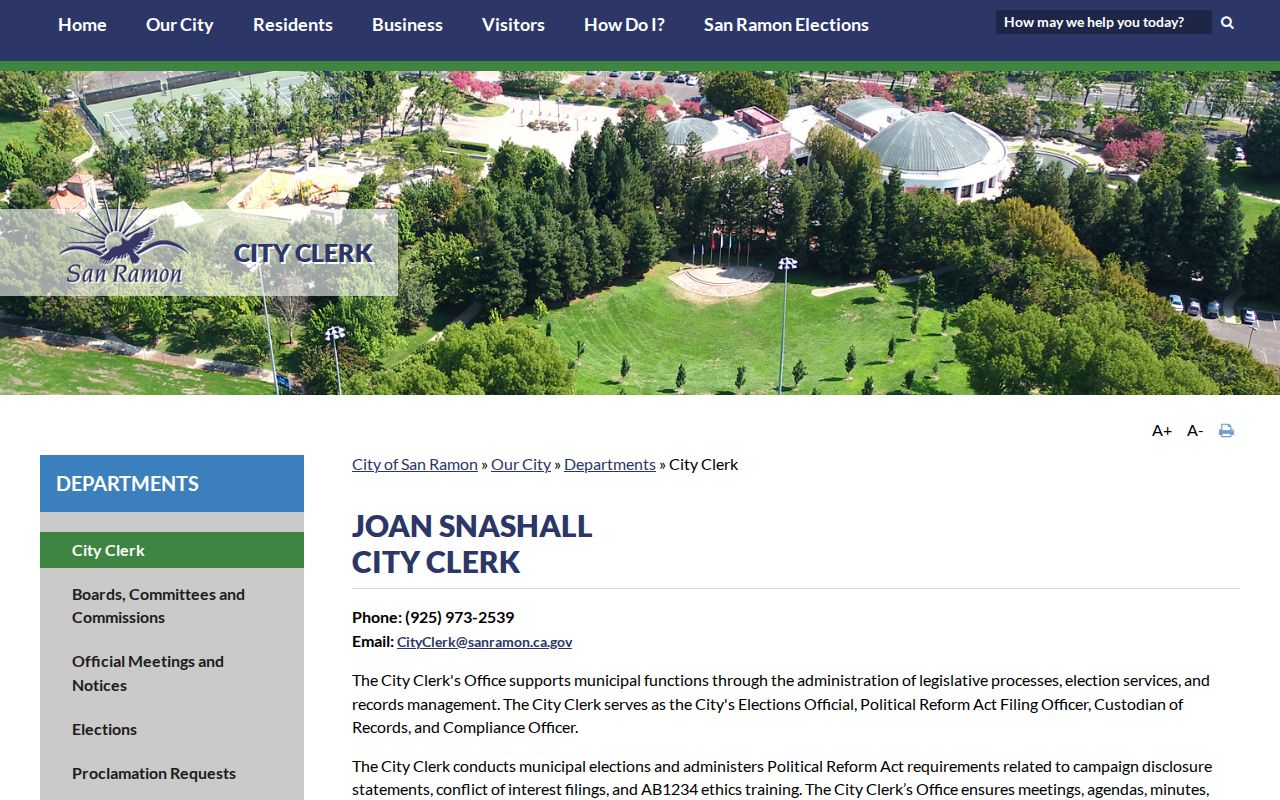
The City Clerk capture shows the municipal doorway. It is a source for city-created records, not a public list of private residents.
County Deeds Turn Addresses Into Trails
The Contra Costa Clerk-Recorder index is keyed by parties and recording details rather than a dependable historic street address. Its name mode accepts a party name, a Grantor or Grantee role, and partial matching. Other modes use a document number, document type, recording date range, book and page, old book, APN, or legal description. Person-linked results cover 1986 to the present in the captured workflow; APN deed mode begins March 3, 1997. Some older property records reach the 1800s, but the exact earliest online index year was not verified.
Start from the APN or current deed reference. Read the legal description, document number, recording date, grantor, and grantee. Then search the named seller or prior grantee, constraining the dates and comparing the same land description. A deed chain identifies titleholders and recorded interests. Reverse directories, census pages, newspapers, permits, and probate are needed to add occupants or household context.
The Contra Costa Clerk-Recorder services page leads to the recorded-document search, which is more reliable than guessing an old street label. Book and page, old book, legal description, and the counter grantor-grantee index are the fallback when a historic address is not indexed as expected.
The Clerk-Recorder image points to the county source behind deeds, maps, liens, and certificates. It does not turn every indexed party into a current resident.
San Ramon Courts and Vital Records
The Contra Costa Superior Court Public Portal is the name-search route for public state trial matters connected to San Ramon. Search by case number or party name, then narrow by category or filed-date range where available. A result can show the case number and title, filing date and status, party names and roles, judicial officer, hearing dates, register-of-actions entries, document titles, and a public image.
Public civil documents filed after November 13, 2007 are generally viewable online. Older physical files are held off-site and ordinarily take about 10 business days to retrieve. The Records Unit at Wakefield Taylor Courthouse, Room 103, 725 Court Street, Martinez, handles physical viewing and copies. A picture ID is required to view a physical file. Confidential, sealed, juvenile, and category-limited records do not become open because a name is known.
Vital records are event-based. Contra Costa County or the California Department of Public Health issues birth, death, and public or confidential marriage certificates. Health and Safety Code sections 103525 and 103526 separate authorized from informational certified copies. A confidential marriage certificate is limited to a party or a court order under Family Code section 511. Adoption birth records remain sealed except through the required statutory or court process.
The Contra Costa Superior Court services hub helps separate a docket lead from a certified copy request.
The court capture represents the state trial-record route. A docket is a lead, and the relevant order or judgment is the document that confirms disposition.
California Tools for Affiliation Leads
Some San Ramon searches concern a business, license, professional role, or forgotten asset rather than a home. California Secretary of State bizfile Online can show an entity name, number, type, status, jurisdiction, public addresses, agent, filings, and document options. The California Department of Consumer Affairs license search can narrow a name by board, license type, number, city, or county. Those records verify a public affiliation, not private residence.
The State Controller’s unclaimed-property search is a free name and location lead. A match is not proof of current address; the claimant must complete the state’s verification process. The same care applies to license addresses, which may be a business or service address. Keep an entity number, license number, date, or filing role as the second identity anchor.
California’s unclaimed-property search is shown here as a direct state route.
The unclaimed-property result is a lead for a name and prior location, not a current San Ramon resident record.
The DCA license search supplies another official affiliation check.
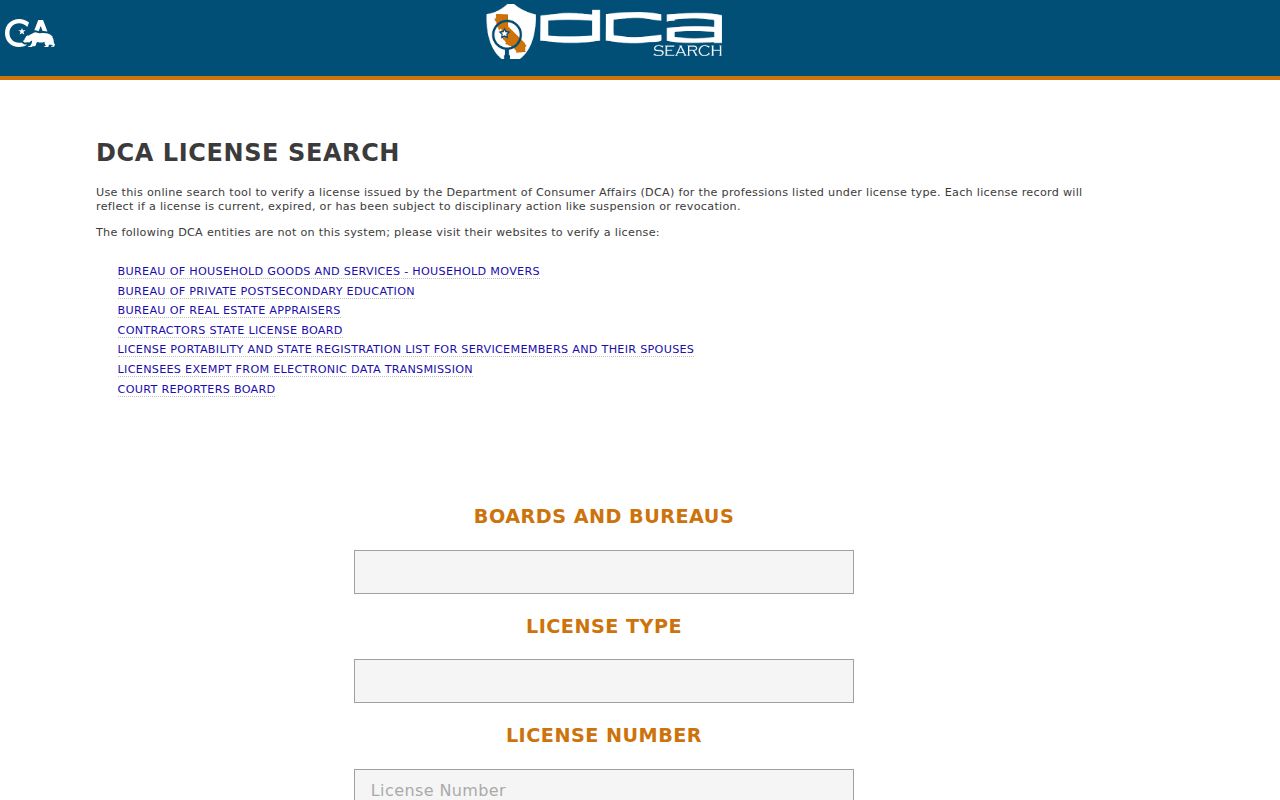
The DCA screen helps distinguish a public credential from an assumption about where someone lives.
California bizfile Online is the state entity index for a business-name lead.
The business filing image is useful for entity identity and filing dates, while its address may be an office or agent address.
San Ramon Historical Sources Need Regional Terms
The San Ramon Library at 100 Montgomery Street is part of the Contra Costa County Library system. As of the research date it listed hours of Monday through Thursday, 10 a.m. to 8 p.m., and Friday through Saturday, 9 a.m. to 5 p.m. The branch has licensed genealogy resources but does not advertise a dedicated genealogy room. Danville Library offers one-on-one genealogy help with the San Ramon Valley Genealogical Society.
Search catalogs under San Ramon Valley, Danville, Dougherty Valley, Bishop Ranch, Rancho San Ramon, Norris Canyon, Tassajara, and Contra Costa, not only “City of San Ramon.” The Contra Costa County Historical Society in Martinez has files on Bishop Ranch, churches, businesses, Dougherty Valley, the El Nido Ranch and Harlan family, government, schools, transportation, planning and zoning, and local people. The Museum of the San Ramon Valley adds photographs, oral histories, newspapers, maps, documents, artifacts, and biographical files by appointment.
Printed Polk, telephone, and reverse-directory runs are not documented in an exhaustive official online list. Exact years, publishers, and local coverage must be confirmed with a catalog or reference desk. A gap in an online finding aid is not evidence that a volume never existed.
The San Ramon city directory collections deserve their own historical-shelf workflow because an old entry can show an occupant while a deed shows a titleholder.
What California Keeps Private
My Voter Status is an authenticated self-lookup. It asks for first name, last name, date of birth, and, when requested, a California driver license or ID number or the last four digits of a Social Security number. It returns the matched voter’s registration context. It is not a public name-and-address directory.
California voter-file release is controlled by Elections Code section 2194. Approved election, scholarly, journalistic, political, or governmental uses may qualify; personal, private, and commercial browsing does not. Government Code section 7924.000 protects specified home addresses, phones, email, identifiers, precinct details, and signatures. Safe at Home adds substitute mailing addresses and confidential voter protections for eligible participants.
Lawful personal use. Use public records for genealogy, reconnection, estate work, civic research, and ordinary personal safety awareness. Never use an address or name trail to stalk, harass, threaten, or harm another person.
A privacy preference does not change an accurate deed. The right correction path is the relevant custodian, and a protected record may need a statutory suppression or confidentiality process.
San Ramon Search Fields Worth Recording
Saving the field labels used by a portal makes a San Ramon residents directory search repeatable. It also shows why two searches that use the same name may return different records.
| Party or name | Recorder name mode; format last name and first name, choose Grantor, Grantee, or All, and use partial match when needed. |
|---|---|
| Recording date range | Recorder date filter; recording date is not the same as the date a document was signed. |
| APN | Parcel key; the recorder’s deed mode reaches March 3, 1997 forward in the documented workflow. |
| Case number or party | Contra Costa Court Public Portal search modes; use case type and dates to separate common names. |
| APN or street address | ParcelQuest Lite keys; use the county map when a current street label does not match an older description. |
- Roll
- An official list or assessment record maintained by a public office.
- Index
- A pointer to a record, not always the full image or certified copy.
- Parcel
- A legally described piece of land tracked by an APN, map, and related records.
- Criss-cross directory
- An address-ordered directory section, often arranged by street and house number, that may identify a subscriber or occupant.
Capture the date of the search. Contra Costa’s court is scanning roughly 12 million pages in 2026 for a future case-document system, initially excluding criminal and traffic records. Access conditions can change even when the underlying case or deed does not.
The San Ramon OpenGov public-record request portal provides a city submission route; the court records page separately describes the present online and physical-file split.
The city request capture shows the records-request fallback when an existing municipal record is not exposed through a search page.
San Ramon Official Rolls and Compilers
Official records and commercial people-finder products serve different purposes. An official index has a named custodian, a defined record type, and a correction or copy route. A commercial product may merge public data from many places, preserve stale addresses, or join two people who share a name. It can be a discovery hint, but it does not replace a deed, court order, library scan, or certified certificate.
| Route | Strength | Weakness |
|---|---|---|
| County or state custodian | Defined source, dates, roles, and office correction path | Access may require identity, a request, a fee, or a counter visit |
| Library or historical society | Context for past households, newspapers, directories, and place names | Exact runs and access conditions can require staff help |
| Commercial search category | May surface a lead across scattered sources | Accuracy, freshness, provenance, and lawful reuse vary |
The best practice is to move from a lead to the custodian. Use the name, date, APN, case number, or entity number to find the source that can confirm the claim.
When the Online Trail Ends
A missing result does not prove that a person, deed, household, or event never existed. It may mean the source is offline, indexed under a former place name, protected by law, outside the city’s jurisdiction at the event date, or not a record the office is required to assemble. Narrow the request to an existing record and give the custodian a date range, address, project, party name, and preferred format.
For city files, use the City Clerk request route. For deeds and certificates, contact the Contra Costa Clerk-Recorder. For a civil file before the online cutoff, use the court’s Records Unit or REC-01 mail request. For historical names, ask the library or History Center staff to verify the catalog and exact run. For a family connection, consent-based contact through an alumni, school, historical, or community channel is safer than treating a search result as proof.
California’s 2026 DROP platform can centralize deletion requests to registered data brokers, but it cannot erase official deeds or court files. Privacy correction and source correction remain separate tasks.
San Ramon’s useful residents directory is therefore a chain of records with clear boundaries. Start with the narrowest official source, preserve the search key, confirm with a second anchor, and stop when the evidence no longer supports the claim.