
San Ramon Historical Directory Holdings
San Ramon does not have a verified, published shelf list for every Polk, telephone, or criss-cross volume. The useful collection is regional. San Ramon Library supplies the branch catalog, licensed databases, newspapers, and reference help. Danville Library adds one-on-one genealogy help through the San Ramon Valley Genealogical Society. The Contra Costa County Historical Society, California State Library, State Archives, NARA, and FamilySearch widen the search when a local catalog record stops short. The table separates known coverage from the years that still need a librarian's confirmation.
| Collection | Verified years | Where held | Access |
|---|---|---|---|
| San Ramon and Contra Costa directory catalog records | Exact local run not published | San Ramon Library and county catalog | Ask reference staff for shelf or microfilm holdings |
| San Ramon Valley Times in NewsBank | June 1995 onward | Contra Costa County Library databases | Search through library database access |
| Herald and Tri-Valley Herald paper | Current plus one year | San Ramon Library | Check the paper shelf and current retention |
| Contra Costa Times obituary search | Post-June 1995; earlier issues separate | Library databases and microfilm | Cardholders search later coverage; earlier issues require microfilm |
| Polk, telephone, reverse, and criss-cross volumes | No exhaustive San Ramon years verified | County, historical-society, and state catalogs | Confirm publisher, edition, and geography before citing |
| Photographs, maps, manuscripts, and directory files | Collection-dependent | CCCHS History Center and State Library | Catalog or research-room request |
The table's gaps matter. No authoritative online finding aid located in the research run gives a first or last San Ramon printed directory year, a complete publisher sequence, or a sample local page. A blank year is therefore a question for the desk, not a fact to fill with a guess.
The San Ramon Library location page is the best starting point for a current branch visit. Its hours at the research date were Monday through Thursday, 10 a.m. to 8 p.m., and Friday through Saturday, 9 a.m. to 5 p.m. The branch is at 100 Montgomery Street and can be reached at 925-973-2850.
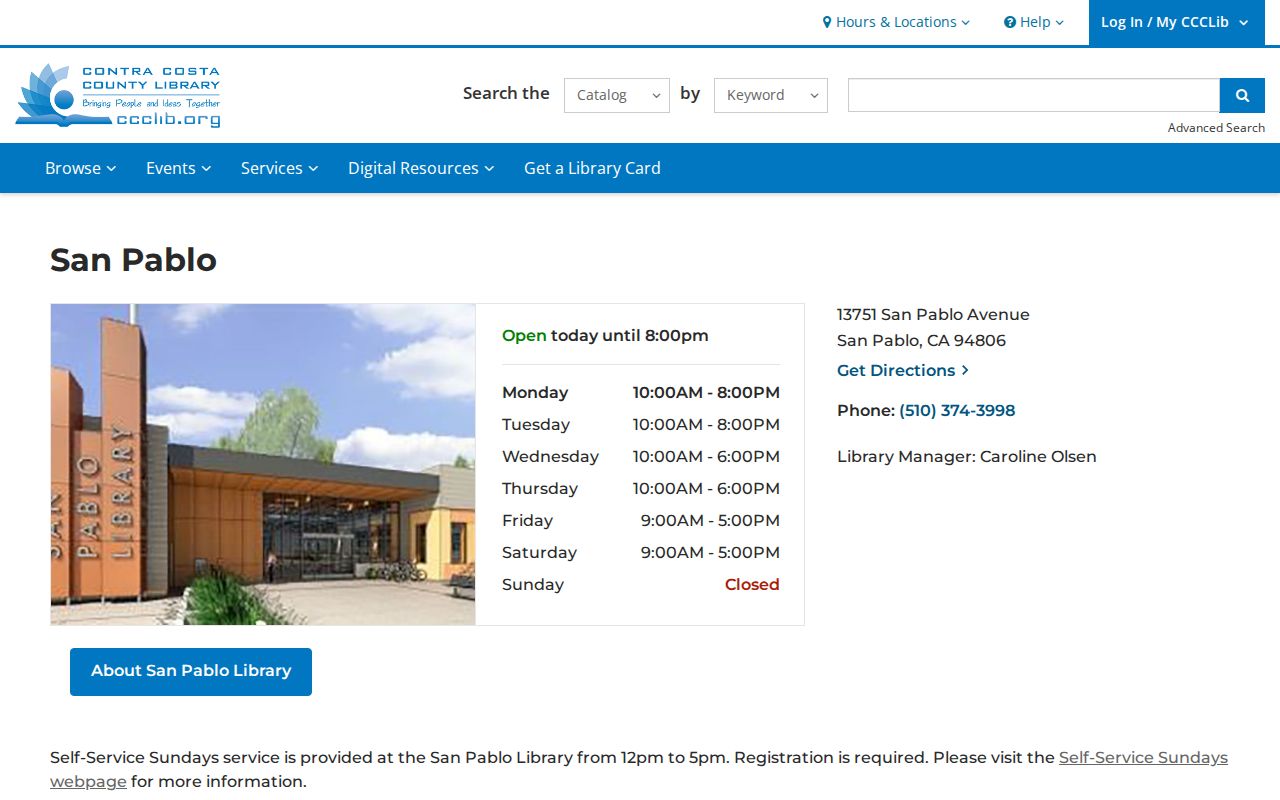
The library image shows the public research setting, but it does not establish a directory year run. Catalog notes and a reference conversation remain the authority for a particular edition.
Note: Library hours, database licenses, and shelf arrangements can change, so confirm branch access before planning a microfilm visit.
San Ramon Directory Research Starts Local
San Ramon Library does not advertise a dedicated genealogy room. Its value is the combined catalog, newspaper access, licensed genealogy databases, and staff route to material held elsewhere in the county system. Search terms should include San Ramon Valley, Danville, Contra Costa, Tri-Valley, telephone directory, reverse directory, and directory. Older material may be filed under the valley rather than the modern city name.
Danville Library has the clearest stated personal-help channel. Its one-on-one genealogy research assistance works with the San Ramon Valley Genealogical Society. That help is useful when a surname is known but the volume, place label, or record type is not. Ask for an edition's geographic scope before assuming a Contra Costa or East Bay book includes the San Ramon address in question.
The Museum of the San Ramon Valley in Danville adds photographs, biographical files, oral histories, newspapers, maps, documents, and artifacts. Archival access is by appointment at 925-837-3750. These materials can explain a family, ranch, school, or civic group that a city directory only names in passing.
The Contra Costa County Historical Society History Center in Martinez keeps San Ramon files on Bishop Ranch, churches, businesses, Dougherty Valley, El Nido Ranch and the Harlan family, government, historic sites, the Iron Horse Trail, oral histories, people, planning and zoning, police, schools, and transportation. A directory hit becomes more useful when one of these local files supplies a date or place anchor.
The Contra Costa County Historical Society collections page is the source for the History Center holdings shown here.
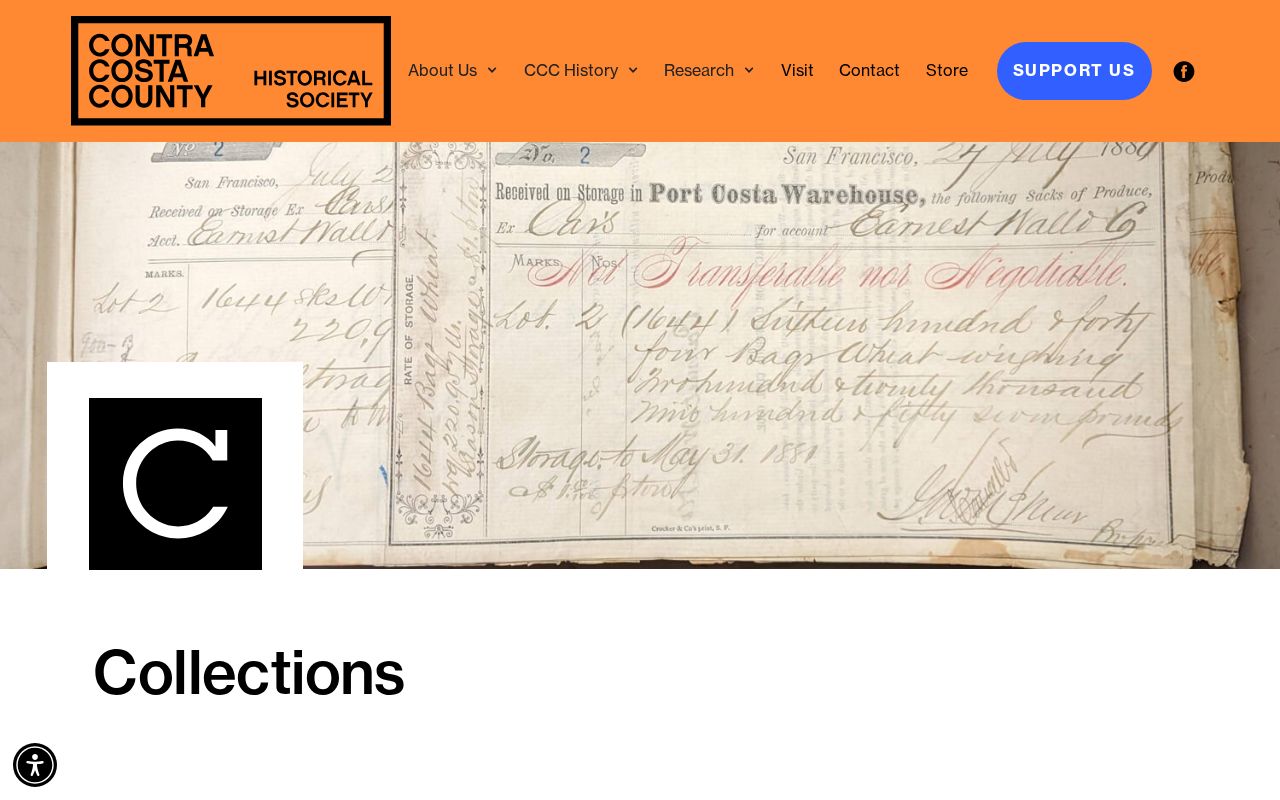
The image is a route to the History Center, not a promise of a searchable San Ramon resident roll. Staff access and collection-specific finding aids determine what can be reviewed.
San Ramon City Directory Online Trails
Online discovery is helpful when it stays separate from proof. The digitized Polk search at the Internet Archive can reveal that a California directory item exists, but the search result does not verify a San Ramon edition, a complete local run, or the page's geographic coverage. Open the item, inspect its title and contents, and record the exact locality before using a name or address as a clue.
The California State Library's genealogy and California-history resources are a second path. Its catalog can point to city and county histories, newspapers, directories, and family collections that do not appear under “San Ramon” alone. The California State Archives adds government record groups and finding aids. State-level catalog work is especially useful for pre-incorporation research because the modern city series did not yet exist.
The California State Archives research page shows the statewide fallback for government records and historical finding aids.
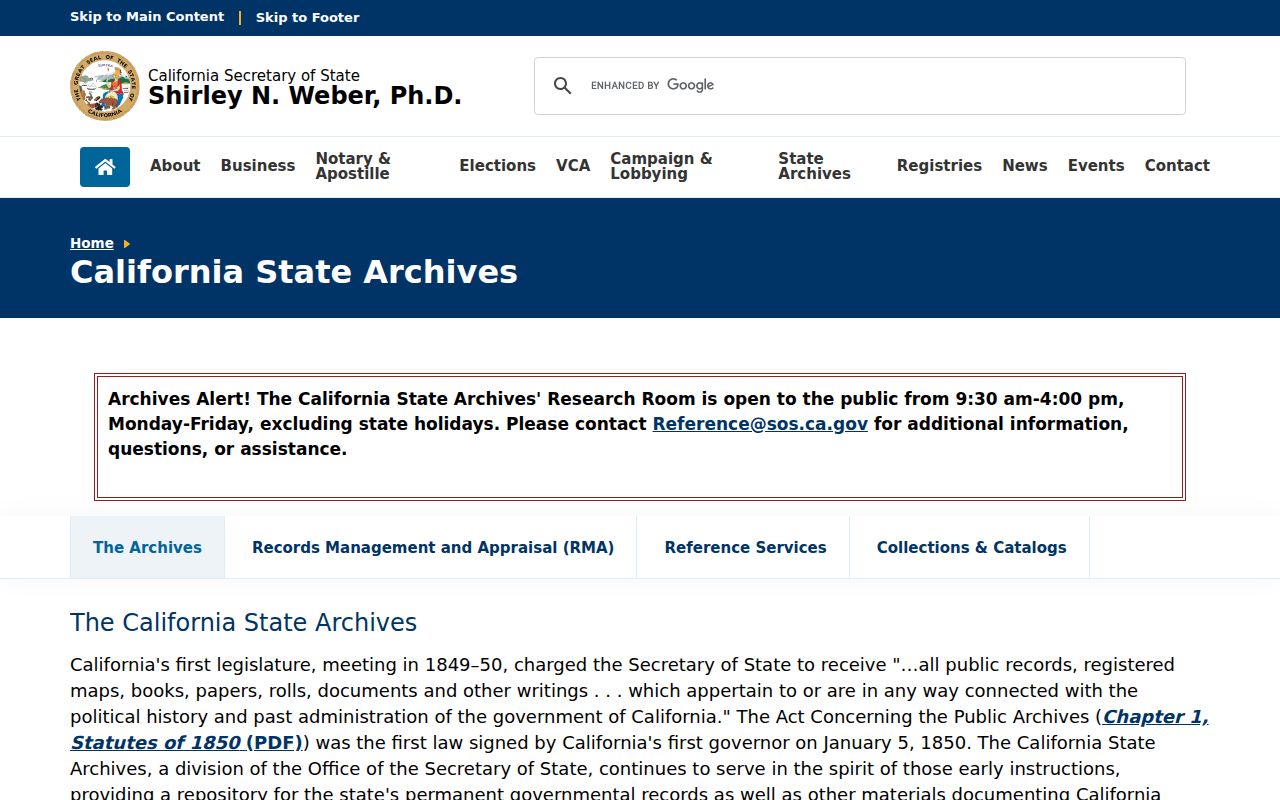
The State Archives image points to catalog and research-room work rather than a confirmed San Ramon directory run. Check the record group and locality before citing a name.
A digitized page is still an index-like lead, not an identity decision. Compare the spelling, spouse, occupation or title, address, and date with a second source. A phone subscriber may represent one person in a household. A business listing may name an office or agent. A printed entry needs context before it becomes a family-history fact.
The digitized Polk directory discovery page illustrates why a search trail must be checked at the item level.
Use the image as a research prompt only. No verified San Ramon-specific Polk or criss-cross year list was located, so no local year is assigned to the screenshot.
Decode a San Ramon Directory Entry
No openly accessible, authoritative scan of a San Ramon-specific directory entry was found in the research run. A reliable reading method can still be set out from the field inventory. First photograph or transcribe the volume's abbreviation key. Then capture the entry exactly, including initials, punctuation, spouse notation, address, and cross-reference marks.
| Surname and given name | Record the surname, given name, initials, spacing, and compound-name form. |
|---|---|
| Spouse notation | A spouse may appear in parentheses beside the named person. |
| Widow or widower mark | Widow or widower wording can supply a family-history date clue. |
| Occupation or title | Copy the printed occupation or title without treating it as an identity match by itself. |
| Business or affiliation | Record the named business or affiliation when the edition supplies it. |
| Residence and business address | Keep a home address separate from a business address and note the street form exactly. |
| Telephone number | A number identifies a subscriber or listed contact, not every person at the address. |
| Owner or renter mark | Use the mark only when that edition defines it in the key. |
| Cross-reference or continuation | Follow “see” entries and continuation marks before closing the record. |
- Criss-cross directory
- An address-ordered section arranged by street and house number; it may list an occupant or subscriber and a telephone number.
- Householder index
- A name-oriented index that points to a household listing; its scope depends on the edition.
- Abbreviation key
- The volume's guide to short marks and terms. Read it before expanding any entry.
- Continuation mark
- A sign that sends the reader to another line, page, or related listing.
“r,” “h,” “bds,” and widow abbreviations can vary by publisher or year. The key controls the meaning. A criss-cross directory also needs a date check because an address may have been renumbered, extended, or absent when an older volume was printed.
Note: A directory abbreviation has meaning only within its own edition, even when the same letter appears in another publisher's volume.
San Ramon Criss-Cross Directory Pages
The reverse side of a directory changes the question from “What name is spelled this way?” to “Who was listed at this street and house number?” Sort order is the point. Start with the street, move to the house number, then read the occupant or subscriber line and any linked name entry. This is the closest historical tool to a by-address lookup, but it is not a full household census.
Use the reverse section with restraint. A listed telephone subscriber may have moved, shared the line, or represented a business. A householder index may omit other adults. A renter may appear in a telephone listing yet never enter a deed or assessment chain. Note the edition date, the page, the exact street spelling, and whether the listing is residential or business.
For a present-day question, the historical reverse directory should point toward a name and date, not end the inquiry. The current record trail belongs in address-keyed sources such as the parcel map, recorded documents, and city permit files. Historical directory collections are strongest when they bridge a gap between census years or explain why a surname appears at an old San Ramon address.
When a directory name needs a present-day identity check, the one-person record workflow in San Ramon resident lookup records supplies the next set of questions without treating the old listing as current proof.
Tracing San Ramon Households Across Editions
A household trace works best as a dated log. Write the exact name, spouse, address, occupation or title, telephone, and source page for every sighting. Record the first appearance and last appearance rather than only the most interesting entry. The gaps can then be tested against the public census, deeds, permits, maps, newspapers, obituaries, and probate records.
- Find the earliest confirmed appearance and copy the name, address, spouse notation, and edition details.
- Follow the name through later volumes, marking each move, spelling change, added initial, and first or last appearance.
- Use the criss-cross section to test the old street and house number, then check whether the line is a home, business, or subscriber listing.
- Pair directory sightings with the public 1940 and 1950 census, comparing household members, ages, relationships, and location.
- Use deeds for ownership, permits and maps for the property's physical history, and obituaries or probate when a person disappears.
Disappearance is not one event. The person may have moved, died, changed a surname, stopped taking a listing, or lived at a street that had not yet been built. A later newspaper notice can explain a gap, while a deed can show only a title transfer. Each source answers a different part of the household story.
1950 Census and San Ramon Directory Pairing
San Ramon history crosses several record jurisdictions. A timeline keeps the place label honest and helps explain why a modern city search may fail in an old catalog. These dates are record-keeping anchors, not invented directory publication years.
- 1850: Contra Costa County was one of California's original 27 counties, so county land, court, probate, and marriage records predate the city.
- 1983: San Ramon incorporated. Older people and land evidence may be filed under the San Ramon Valley, Danville, ranchos, or county offices.
- June 1995: NewsBank coverage of the San Ramon Valley Times begins, creating a useful newspaper date marker for later family research.
- Research date: The San Ramon Library retained the Herald and Tri-Valley Herald current plus one year on paper, while earlier Contra Costa Times obituaries require microfilm.
The 1950 census is especially useful beside a directory sighting because it can show household relationships, ages, birthplaces, and occupation alongside a name and address clue. Census coverage currently reaches 1950; a 1960 release is scheduled for 2032 under the 72-year rule. Keep the census location, directory address, and county place label in separate fields.
Note: A missing directory entry can reflect an unbuilt street, a changed name, or a discontinued listing rather than a missing family.
San Ramon History Beyond Directory Shelves
A city directory rarely explains why a family was tied to one part of the valley. The Museum of the San Ramon Valley's photographs, oral histories, maps, documents, and biographical files can connect a name to a place or institution. Forest Home Farms and the Boone family provide another land-and-family bridge. Compare those local-history clues with deeds, maps, census records, and newspaper notices.
CCCHS files can be searched by subject as well as by surname. The San Ramon holdings include the following local threads:
- Bishop Ranch, businesses, and government records
- Churches, schools, people, and oral histories
- Dougherty Valley, El Nido Ranch, and the Harlan family
- Historic sites, the Iron Horse Trail, and transportation
- Planning, zoning, police, and community development
These are context files, not an open resident roll. A photograph caption or oral-history interview is a lead that should be dated and checked against a primary record. That practice matters in a growing city, where one family name may appear in ranch, school, civic, and business settings across decades.
Why New San Ramon Streets Vanish
Older San Ramon sources cannot list streets that had not been platted. The city grew from a rural crossroads and ranch landscape into freeway-linked suburbia, with later master-planned growth in Dougherty Valley, Gale Ranch, and Windemere. A blank result in an early directory may describe the age of the road or subdivision, not the absence of a family from the region.
Search the regional names that carried the record before the modern city label: San Ramon Valley, Danville, Dougherty Valley, Bishop Ranch, Rancho San Ramon, Norris Canyon, Tassajara, and Contra Costa. The county's land and court records, school material, newspapers, and parcel maps can preserve a connection that a city keyword misses.
Annexation history can also change the proper custodian. The city GIS legend records the original incorporation boundary and named sequences including Canyon Lakes phases from 1986 through 1994, Central San Ramon in 1987, Thomas Ranch in 1998, Dougherty Valley annexations from 1998 through 2020, Henry Ranch in 1999, and Faria Preserve in 2008. Use the event date and parcel location before asking a city office for a pre-city record.
San Ramon Directory Research Gaps
The largest gap is simple: no verified exhaustive San Ramon Polk or criss-cross directory year list, local sample page, first printed year, last printed year, or publisher sequence was found in an authoritative online source. The gap must stay visible. It is not safe to turn a broad California digitized-directory search into a local year claim.
Ask a reference librarian or History Center staff member to identify the publisher, edition, locality, shelf or microfilm location, and whether the volume is name-ordered, street-ordered, or both. Ask the same questions of a state catalog when county shelves end. The California State Library's genealogy and California-history resources are a useful statewide fallback.
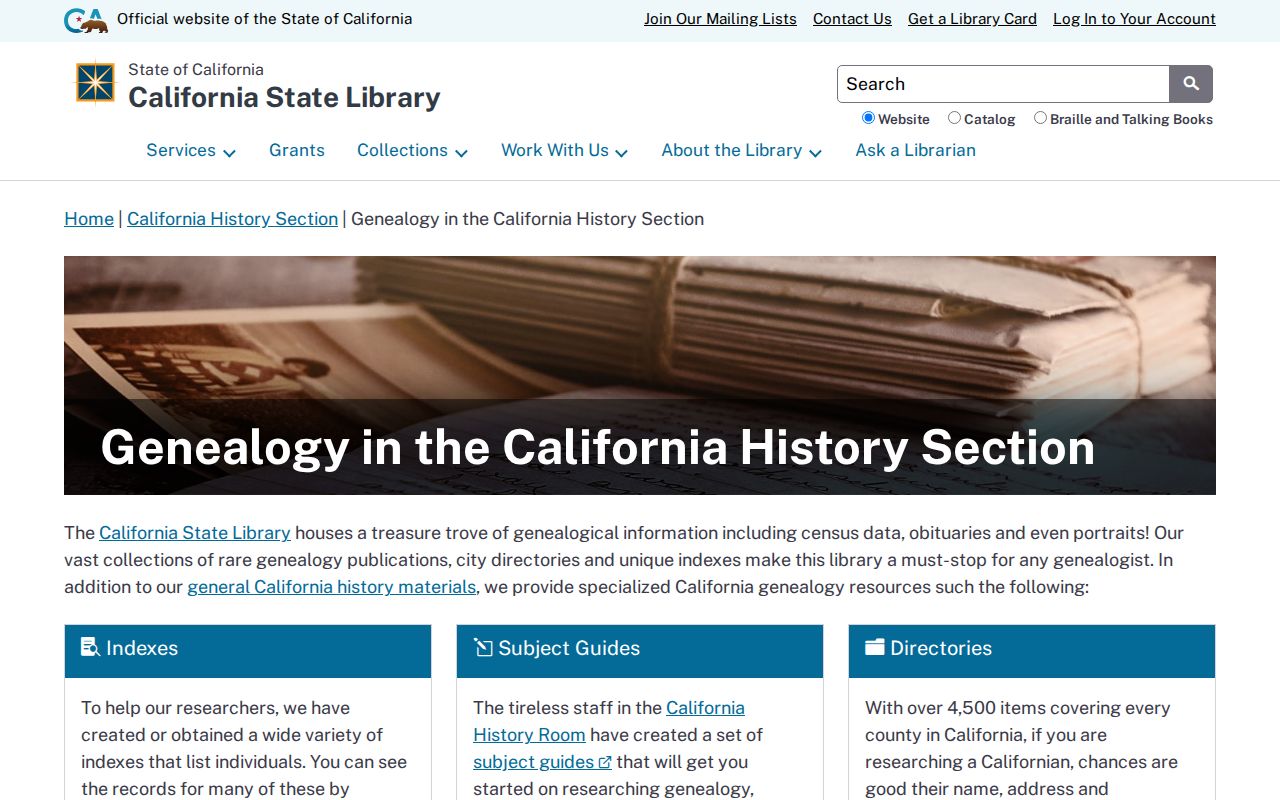
The State Library image points to the broader research shelf, not to a confirmed San Ramon directory page. NARA, FamilySearch, newspapers, deeds, probate, school yearbooks, and the Museum of the San Ramon Valley can fill different parts of the trail.
A careful San Ramon city directory search ends with a documented source, a clear date, and a stated limit. When a volume cannot be verified, record the research gap and move to the next independent collection rather than manufacturing continuity.